TYPES OF MAINTENANCE
WHAT ARE THE DIFFERENT TYPES OF HELICOPTER MAINTENANCE?
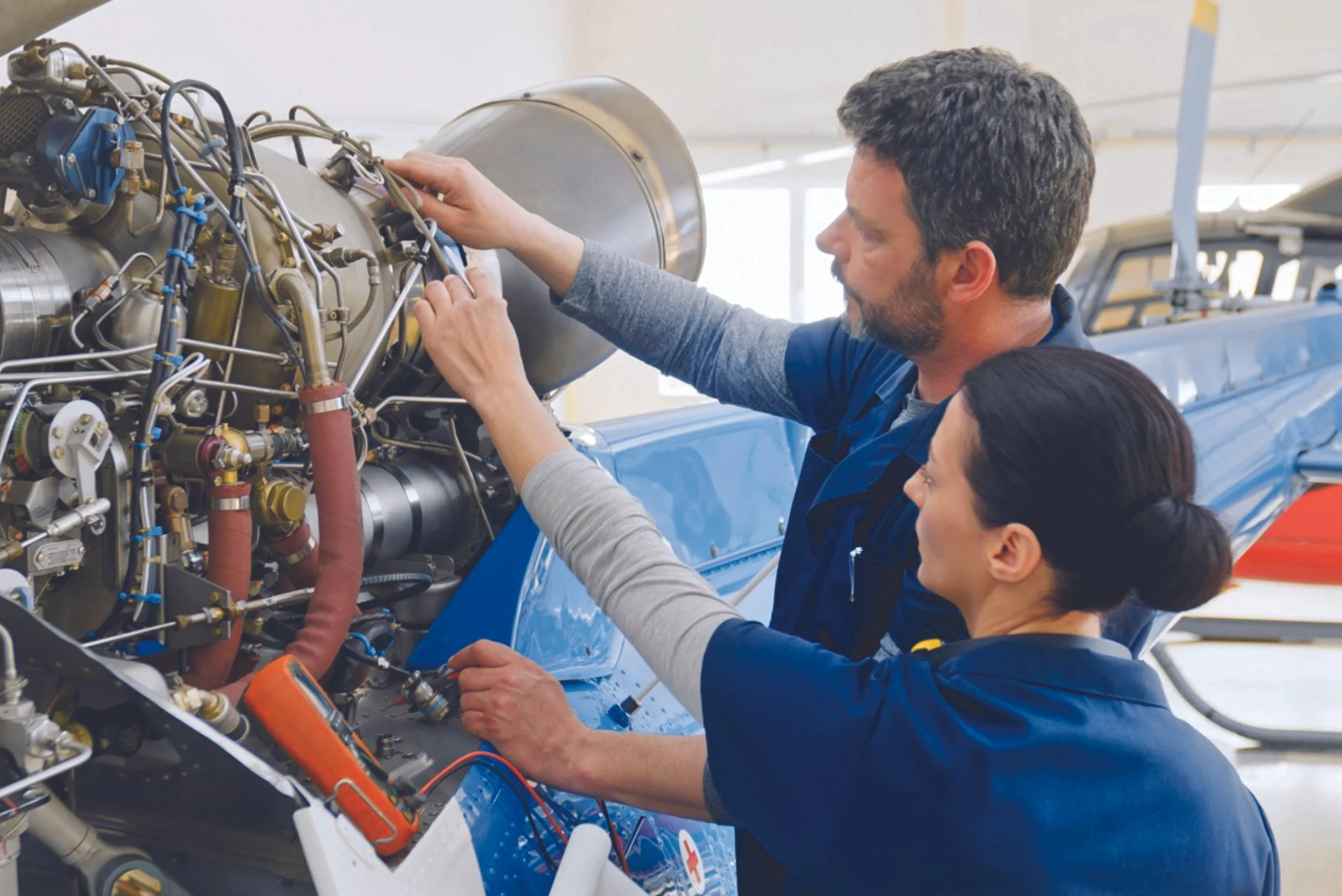
Turbine Engine Maintenance
Turbine Engines operate on the principle of converting energy from burning fuel into mechanical power. This process involves drawing in air, compressing it, mixing it with fuel, and igniting the mixture to produce high- speed exhaust gases. These gases pass through a turbine, which extracts energy to drive a shaft connected to the helicopter’s main rotor and tail rotor.
Helicopter turbine engines are prized for their high power-to-weight ratio, reliability, and efficiency, making them suitable for a wide range of helicopter applications, from light utility helicopters to heavy-lift and military models.
Quick Facts
Light weight
Powerful
Low vibration
Reliable
Long life
Expensive
Piston Engine Maintenance
Piston Engines operate by drawing air and fuel into a cylinder, compressing the mixture, and igniting it with a spark plug. The resulting explosion pushes the piston down, turning a crankshaft that is connected to the helicopter’s main rotor and tail rotor.
Piston engines are typically found in smaller, lighter helicopters used for training, private flying, and light utility roles. They are valued for their simplicity, lower cost, and ease of maintenance compared to turbine engines, although they generally provide less power and efficiency.
Quick Facts
Lower cost
Heavier
Require more maintenance
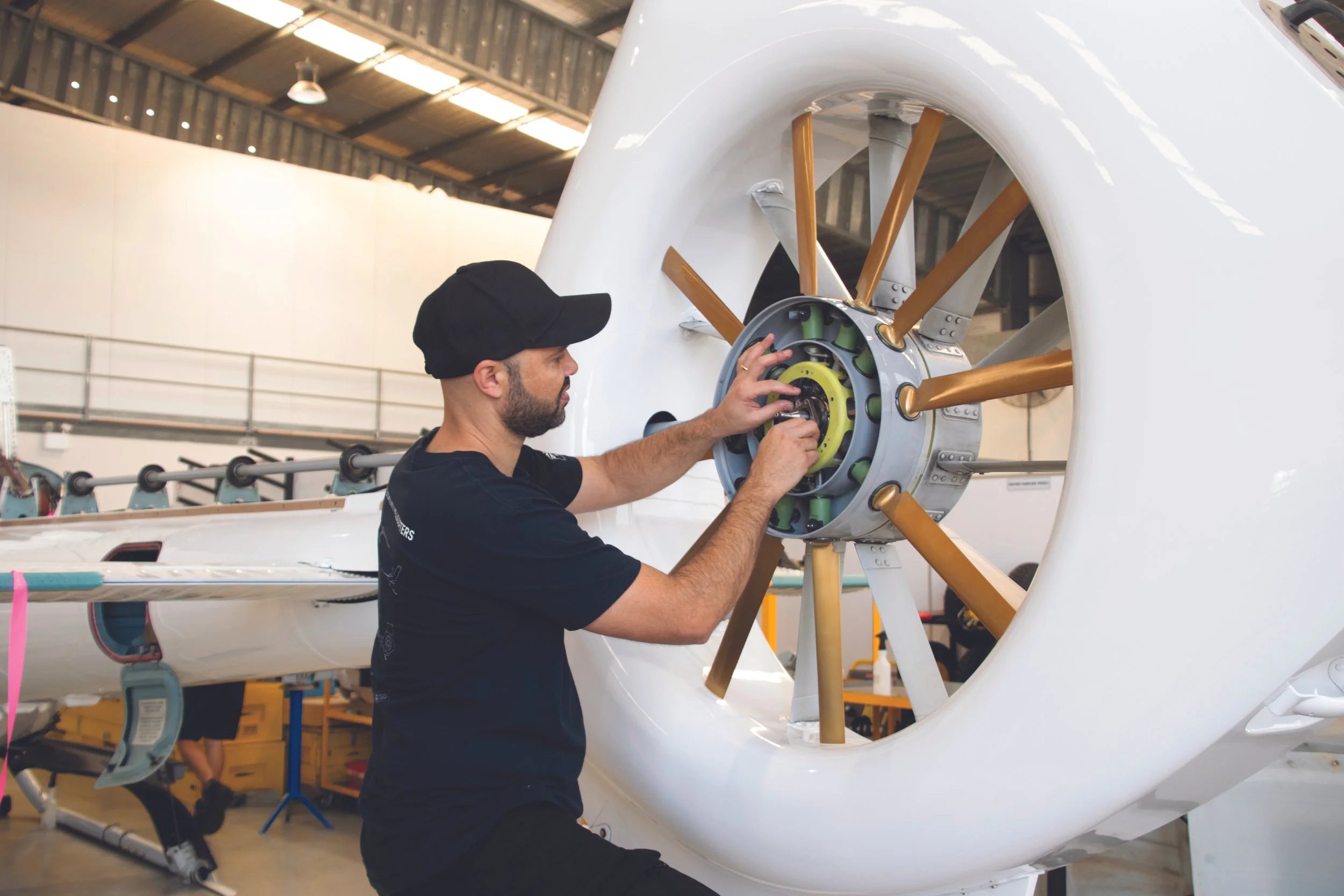
Airframe Maintenance
This includes:
Structures
Transmission
Main and tail rotor assemblies
Landing gear
Environmental systems - heating / ac
Cabin furnishings
Avionics
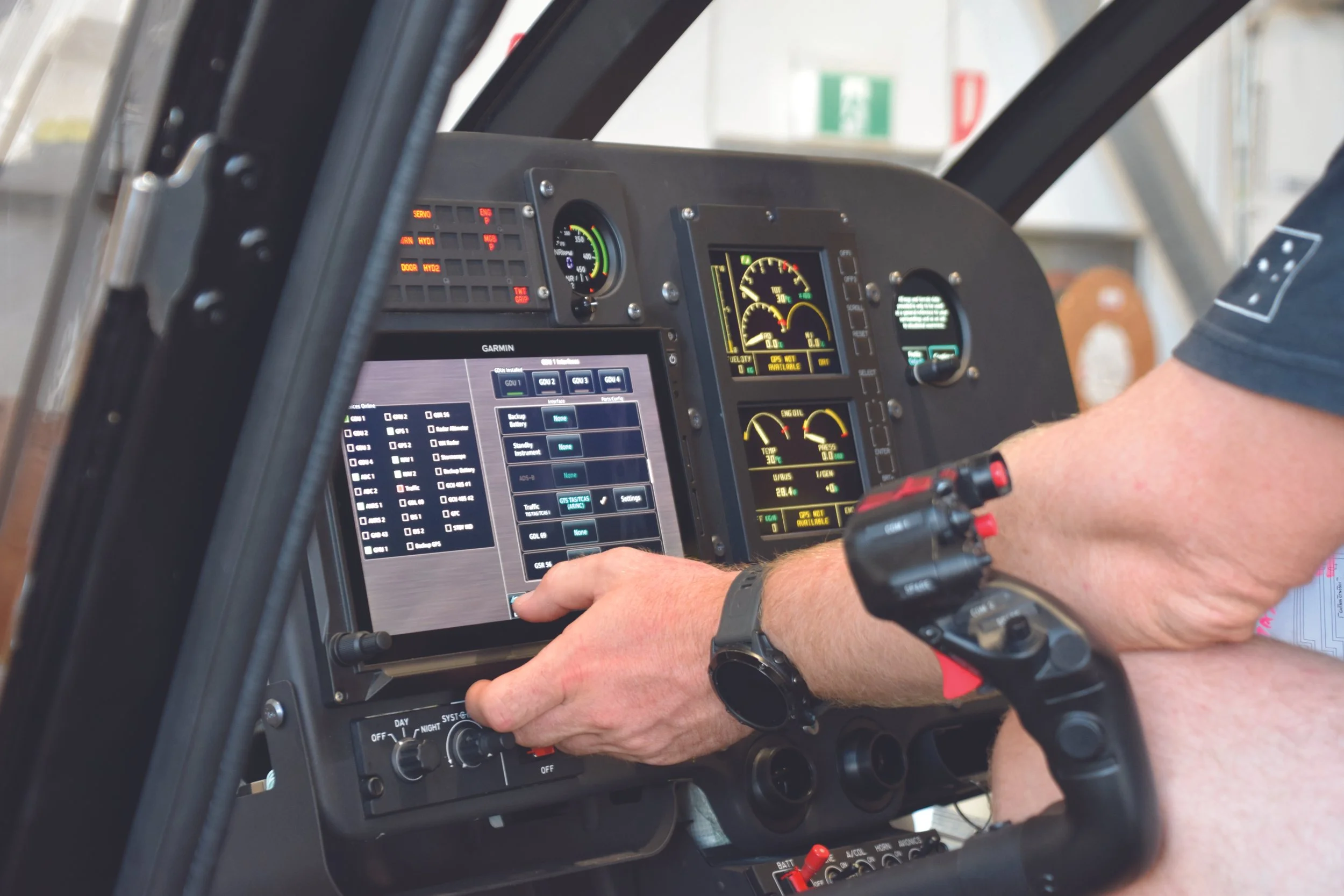
This includes:
Electrical systems
Instrumentation
Communication equipment
Navigation equipment
Special mission equipment
Structures
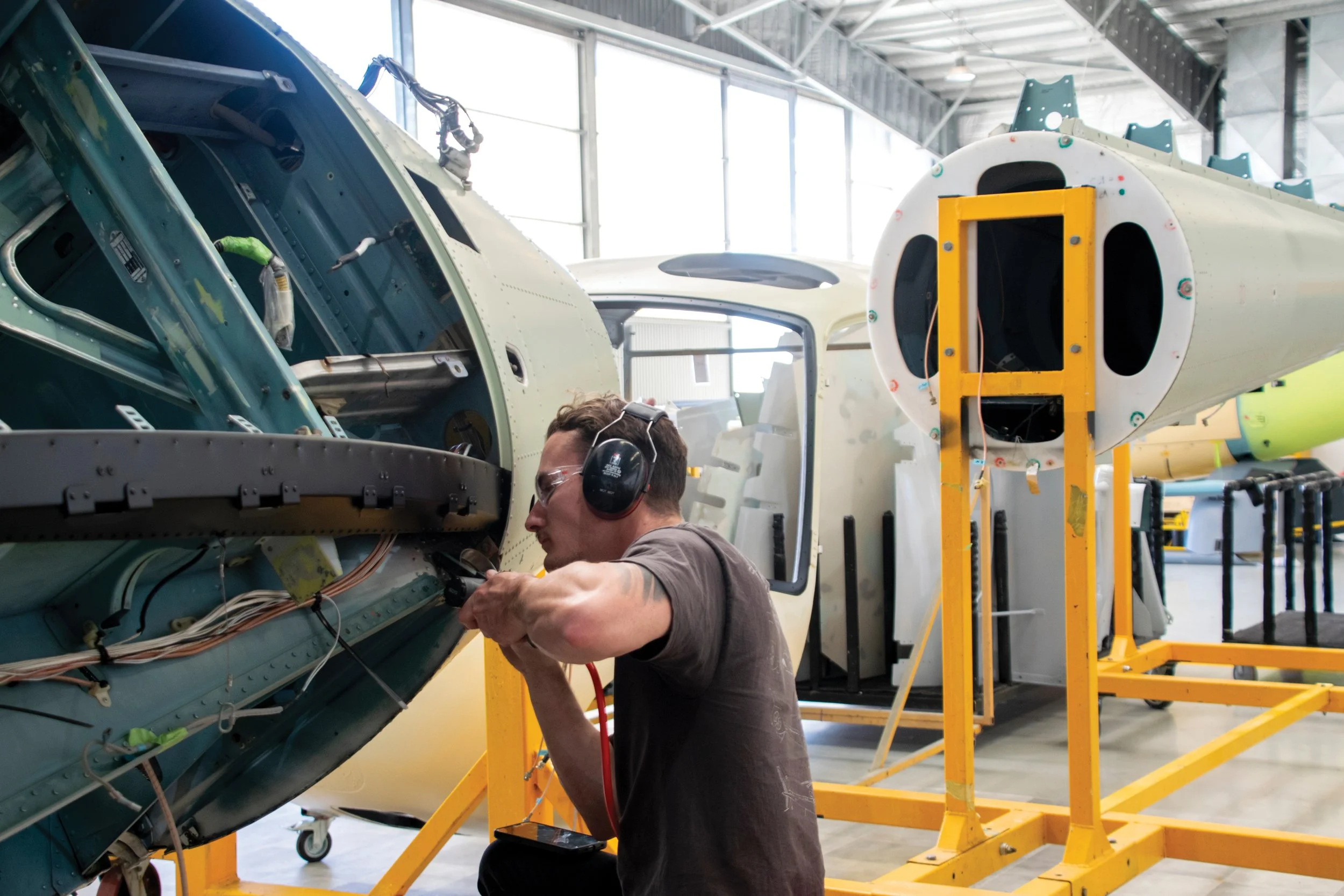
This includes:
Sheet metal work
Composite materials such as carbon fibre,
epoxy and kevlarSurface refinishing